Israel Reflections 2019–Justice Aharon Barak
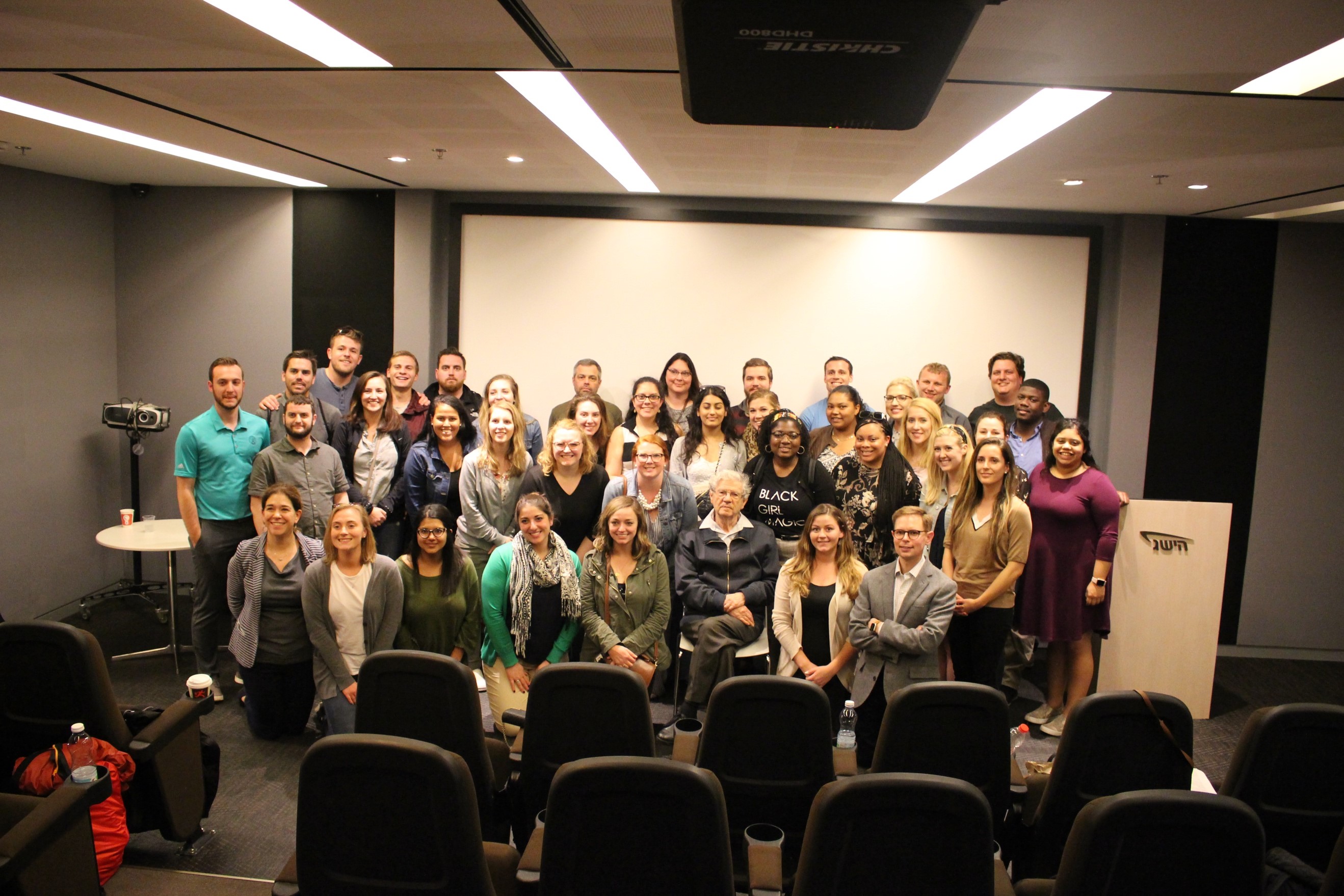
MU Law students with retired Israeli Supreme Court Justice Aharon Barak

It is always such a highlight of our trip to hear from Justice Barak and this was no exception–student Lucas Baker reflected on the meeting:

It was an incredible opportunity to meet with retired Chief Justice of the Israeli Supreme Court, Justice Aharon Barak. Rarely do law students have the chance to learn from a true giant in the law. Justice Barak lectured our group about the general contours of Israel’s Judiciary and non-constitutional system, before we took a deeper dive into a number of other topics.

The Chief Justice fielded questions regarding differing judicial philosophies between the United States and Israel. With incredible insight, Justice Barak discussed how the public confirmation proceedings in the United States lead to manufactured and politicized “judicial philosophies.” In Israel, on the other hand, the confirmation process is not public and therefore not politicized, which allows for consensus in rules of interpretation. In Israel there are no “activist” nor “originalist” judges. Rather, judges have a much more uniform approach to the law. After witnessing the recent circus of a confirmation process here in the United States, it was fascinating to hear that there is little political split among judges, and no divergence in methods of interpretation in Israel.

Another key takeaway from Justice Barak’s lecture involved dispute resolution.
Continue ReadingIsrael Reflections 2019–Justice Aharon Barak

Israel Reflections 2019–Immigration, Racism, & Refugees

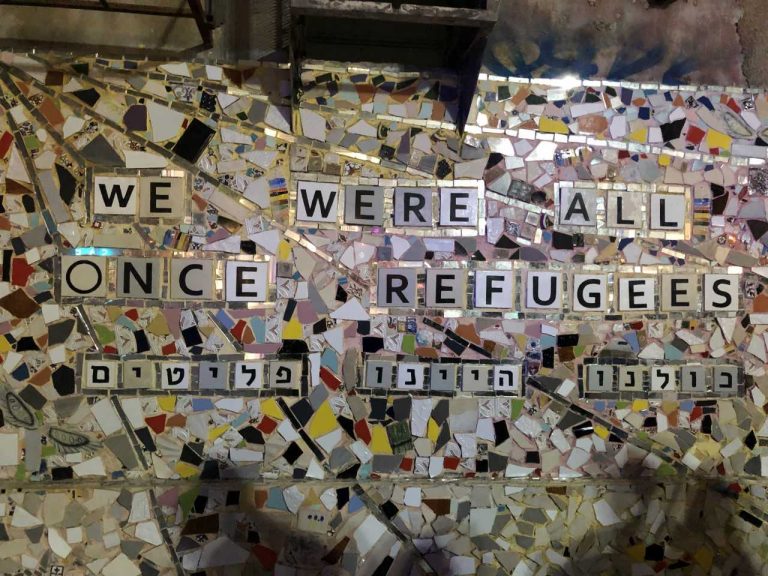
On our first full morning in Tel Aviv, we turned to some (other) hard issues facing different parts of the population in Israel. Our first speaker was Mazal Bisawer, a PhD candidate and student leader at Tel Aviv University. Mazal spoke to us about the Ethiopian population in Israel—a minority within a minority—most of whom immigrated to Israel in the 1970’s and 1980’s. We’ve had visits with other Ethiopian Jews over the years (see blogs from 2017 here and 2015 here) dealing with the issue of diversity in Israel. And even on the main street in Tel Aviv, the concept of refugees is front and center with this beautiful mosaic:

Refugees mosaic

Shayla Sanders identified with Mazal’s comments:

She spoke broadly about police brutality against young Ethiopian men and emphasized that while only 2% of the population in Israel, Ethiopian young people make up 60% of the population in juvenile detention facilities. I was struck in this moment with a sickening, yet somehow validating sense of déjà vu. I recognized these statistics. I know that African Americans in the US face a similar plight. In hearing her speak to some of these issues, I heard some of the same emotions I myself experience when discussing racial issues here in the US. I heard in her the same passion I feel when discussing instances of injustice against my people. I heard her pain when she told us how people would say that Ethiopians should feel lucky to only be experiencing minor levels of racism because they are the only group of black people not brought by force into a country and compelled into slavery. I felt her frustration when she emphasized that speaking out on these issues, she is often met with the same reaction as if she had stated a belief in little green aliens and UFOs… I have myself been written off as a radical idealist who plays the race card all too frequently. I have been faced with those who would rather police my tone than address and confront the truth in my statements. So, imagine my utter lack of shock when our very own tour guide immediately dismissed Mazal as radical and gave an open invitation to our tour group to take her opinion with a grain of salt not granted to any of the other speakers we had seen thus far.

Continue ReadingIsrael Reflections 2019–Immigration, Racism, & Refugees

Israel Reflections 2019 — Shared Society Continued!

Great to see so many of us at the ABA conference this past week!  We will have blogs soon about conference sessions and lessons…And, in the meantime, here’s another from Israel:

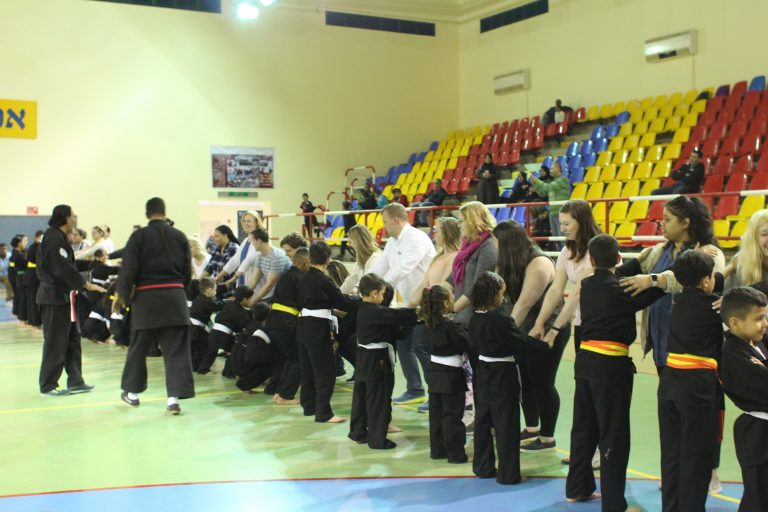
Our work out for the week was held at Budo for Peace (BFP). BFP is an innovative non-profit educational organization based in Israel that uses the ethical values of traditional martial arts to empower children while promoting social harmony and peace in the Middle East. Since its establishment 14 years ago, BFP’s programs have impacted thousands of children from diverse cultural, religious, ethnic and socio-economic origins throughout Israel and the Middle East, including refugees in Lesvos, Greece.

A line of young martial arts students wearing black uniforms stand with a line of adults inside of a gynmasium.Yamilett Lopez said “When our group arrived, we got to practice some Budo with the children as well as learn about the Budo for Peace’s goals of advocating co-existence and dialogue, empowering females, fostering immigrant communities, and engaging at risk youth. Overall, it was amazing to see a sports organization help bridge a divide among communities.”  This was both a ton of fun and hilarious!

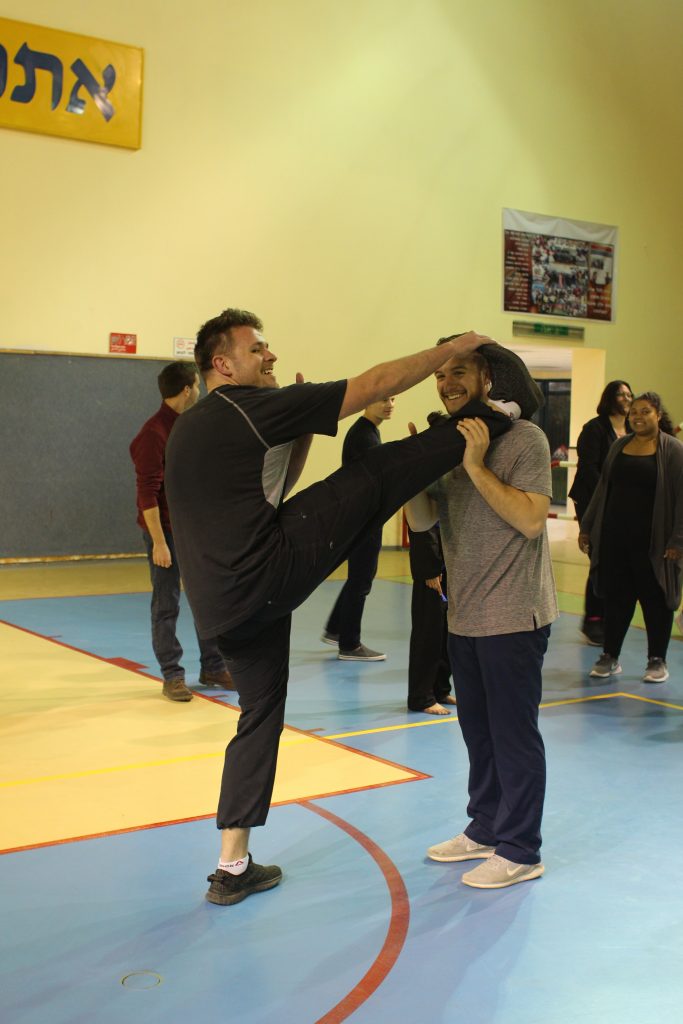
A smiling adult in athletic clothing rests his leg on top of the shoulder of a smiling friend.We then had dinner at Juha’s Guesthouse in Jisr a Zarqa. Meaghan McTigue noted “The town is the only Arab village on the Israeli coast of the Mediterranean Sea and their guest house is an embodiment of hope in their future. The guest house is the fruits of a Jisr local Ahmed and Jewish Israeli Neta. The unlikely pair partnered with a shared vision and believe in the potential of the town and its people. The guest house serves as an economic asset to the village where guests are encouraged to explore the area and shop from local merchants.”

Cross posted at Indisputably.org .

Continue ReadingIsrael Reflections 2019 — Shared Society Continued!