Japan’s Vulnerability Under the U.S.-Japan Security Treaty
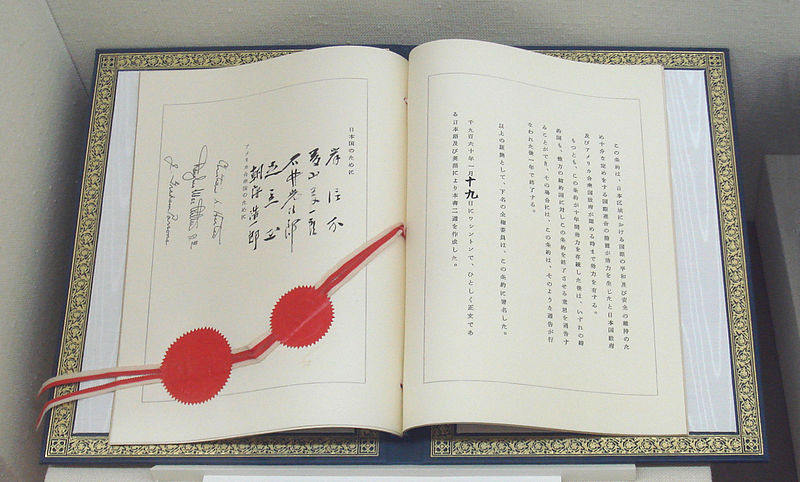 Many have noted that the U.S.-Japan Treaty of Mutual Cooperation and Security could pull the United States into the dispute between Japan and China over the Senkaku / Diaoyu Islands by obligating the United States to come to Japan’s defense in the event of hostilities. Article 5 of the Treaty has the key language and provides that “each Party recognizes that an armed attack against either Party in the territories under the administration of Japan would be dangerous to its own peace and safety and declares that it would act to meet the common danger in accordance with its constitutional provisions and processes.” Because the Senkaku / Diaoyu Islands are “under the administration of Japan,” there is no question that the Treaty applies to them. For that reason, the dispute over the Islands poses a risk for the United States; if any of the nearly daily incursions by Chinese vessels into the surrounding waters turns into an “armed attack,” the United States will have a legal obligation to back Japan. Yet the precise nature of that obligation is unclear. For a couple of reasons, I think it is more limited than many have assumed.
First, Article 5 does not necessarily require the United States to use military force in responding to an armed attack; the obligation is simply to “act to meet” the danger presented. It is not unreasonable to imagine that the United States could satisfy that obligation by pursuing economic or even diplomatic measures, depending on the circumstances. The vagueness of the text leaves Washington with significant discretion to decide whether a particular response will be enough.