
Treatment, Education Programs Needed in National Drug Fight, Drug Czar Says

“Bumper sticker” approaches are politically appealing and popular, but they aren’t the right ways to deal with complex major issues connected to drugs and the toll they take, the nation’s drug czar said Wednesday during an appearance in Eckstein Hall.

Neither calling for a war on drugs nor calling for legalization of drugs are effective paths, said, Gil Kerlikowske, whose actual title is director of the White House Office of National Drug Control Policy. Smart, well-structured approaches that combine law enforcement, treatment options, and prevention efforts create a third path that can yield good results, Kerlikowske said.

The “drug war” of the 1980s and ‘90s was “a totally inadequate answer to what is really a very complex problem,” he said. Using law enforcement alone, “we’re not capable of solving drug problems.” But using multiple approaches can show genuine and positive results.

Kerlikowske cited a nationwide decline in cocaine use – he estimated the decline at 40% — as an example of multiple factors coming together to help reduce a problem. He said the factors include reduced cocaine production in Columbia, better interdiction of drug shipments by law enforcement, and widespread recognition among potential users in the US of the dangers and risks of the drug.
Continue ReadingTreatment, Education Programs Needed in National Drug Fight, Drug Czar Says

Restorative Justice Conference: “Grief Is Inevitable; Misery Is Optional”

There is no way the legal system – or anyone else — can undo the terrible wounds left on people who have had a loved one murdered. But can the system or those involved in different aspects of it help survivors of a murder victim go forward in leading their lives?

That was the underlying question at the remarkable and emotionally intense 2013 Restorative Justice Conference held last week at Marquette Law School’s Eckstein Hall. “The Death Penalty Versus Life Without Parole: Comparing the Healing Impact on Victims’ Families and the Community” brought together about 200 people from Wisconsin and much of the country to examine the post-murder lives of family members.

But among the many speakers, six stood out – because, as survivors of victims, they personally had gone through the grieving and dealt with the legal system and so many other problems. Three from Texas, two from Minnesota, and one from the Milwaukee area told their searing stories in a pair of panel discussions on Friday morning, the second day of the conference.

Continue ReadingRestorative Justice Conference: “Grief Is Inevitable; Misery Is Optional”

Restorative Justice Conference to Consider Healing for Family Members of Homicide Victims

armourI’m looking forward to this year’s annual Restorative Justice Conference, “The Death Penalty Versus Life Without Parole: Comparing the Healing Impact on Victims’ Families and the Community.” The conference was inspired by a fascinating empirical study comparing the long-run experiences of family members of homicide victims in Texas, which has the death penalty, and Minnesota, which does not. Authored by Marilyn Peterson Armour and Mark S. Umbreit and forthcoming in the Marquette Law Review, the article concludes that the Minnesota family members achieved a higher level of physical, psychological, and behavioral health.

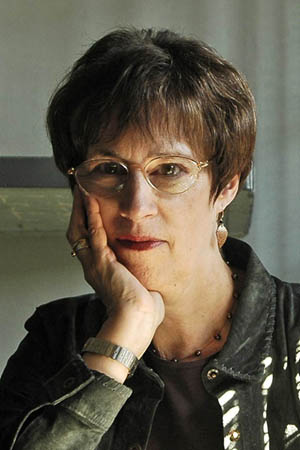
The conference kicks off with a keynote address by Armour (pictured here) at 4:30 on February 21. The following day will include several panels providing a diverse set of first-hand perspectives on the impact of homicide, capital punishment, and the criminal process on family members, lawyers, judges, and many others. Additional information about the conference is available here.

Continue ReadingRestorative Justice Conference to Consider Healing for Family Members of Homicide Victims