
The Cop on My Porch

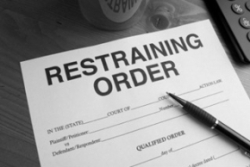
On December 1st, the Azana Salon and Spa in Brookfield reopens for business. Unless you have been out of the country for the last five weeks, you no doubt know that the salon was the scene of a mass shooting on October 21, 2012. A gunman entered the building and killed three women, including his wife, who was a salon employee. He wounded four other women and then killed himself. The shooter’s wife had recently obtained a temporary restraining order against him after numerous domestic violence incidents including, according to the Milwaukee Journal-Sentinel, an incident where the shooter slashed his wife’s tires in the spa parking lot.

Domestic violence has always been a devilishly difficult crime to prevent or prosecute. Abusers tend to be controlling and manipulative, and the visible physical injuries they inflict often pale by comparison to the emotional injuries. Victims are often psychologically abused and controlled to the point that they may feel responsible for the attacks, and they often stay in their relationships hoping for change in their partners. Abused women—and it is most often women—are afraid to leave their abusers and rightfully so. The time immediately after a woman leaves is the most dangerous time, since the abusers often succumb to rage and the need to control their victims. This may cause them to escalate the violence, and while Zina Houghton’s death is tragic, it is sadly not unusual for a battered woman to die at the hands of her abuser.

This tragedy reminded me of an experience I had last spring. The doorbell rang at 8 o’clock one night, and I flipped on the porch light so as to peer out before opening the door. A uniformed police officer was standing on my porch. This is almost never a good thing.
Continue ReadingThe Cop on My Porch

Legal Anomalies in Federal Indian Law, Part II—Tribal Jurisdiction Over Non-Indians

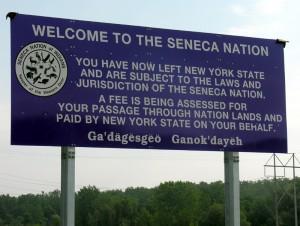
Federal Indian Law—the legal provisions and doctrines governing the respective statuses of, and relations among, the federal, state, and tribal governments—is replete with seeming anomalies when compared to the background of typical domestic law in the United States. The purpose of this post, and of the series of which it is a part, is to identify and examine such anomalies in an effort to acquaint readers with the metes and bounds of Federal Indian Law, while shedding some light on the origins and perhaps the future of this unique legal realm.

The prior post examined one such anomaly, namely, the permissibility of the government’s differential treatment of Indian tribes and their members despite the U.S. Constitution’s guarantee of equal protection. In this, the second installment in the series, another topic of significant contemporary interest will be surveyed. This is the oddly diminished character of Indian tribal sovereignty and, in particular, the extent to which tribes, in their own territories, lack criminal and civil authority over non-Indians or non-tribal members.

The capacity to enact and enforce laws is, of course, one of the hallmarks of sovereignty within the Western political tradition. This includes both criminal laws and civil laws, the latter often being divided into powers of regulation, taxation, and adjudication. It is typically accepted, moreover, that the reach of a sovereign’s laws extends along two axes: citizenship and territory. That is, the sovereign has the authority to govern not only its citizens but also all others who enter its territory. Thus, for example, inquiries into the jurisdiction of courts over a person or his property ordinarily entail an examination of the person’s citizenship and/or the relationship between the person’s conduct or property and the territory of the sovereign to which the courts belong.

In recent decades, however, Indian tribal sovereignty has increasingly been confined to a single axis—that of citizenship—leaving tribes largely powerless to enforce their laws against non-Indians who, within the tribe’s territory, commit criminal conduct or engage in activities that would normally be susceptible to regulation, taxation, or adjudication. Perhaps surprisingly, the institution primarily responsible for this diminishing conception of tribal sovereignty is not Congress, which the Supreme Court has repeatedly described as having “plenary power” over Indian affairs, but rather the Court itself.

Continue ReadingLegal Anomalies in Federal Indian Law, Part II—Tribal Jurisdiction Over Non-Indians

Incarceration and Collateral Damage: Prof. Traci Burch to Speak at Marquette on Nov. 29

We live in an era of unprecedented mass incarceration.  Since the mid-1970’s, America’s imprisonment rate has quintupled, reaching heights otherwise unknown in the western world.  We embarked on this incarceration binge with little understanding of what impact it would have on families and communities.  The past fifteen years, however, have witnessed a great outpouring of research and writing on the collateral effects of imprisonment.  Those who work in the criminal-justice system should be — and I think increasingly are — knowledgeable about the real impact that their work has on the lives of the many human beings who are connected to each incarcerated person.

Practitioners (and students) who would like to learn more about this important issue will have a wonderful opportunity to do so in two weeks, when Professor Traci Burch of Northwestern University comes to Marquette Law School to speak on the “The Collateral Consequences of Incarceration.”  Here is the description:

Dr. Burch will discuss the effects of mass incarceration on families and communities on Thursday, November 29th. This talk is based in part on her forthcoming book, Punishment and Participation: How Criminal Convictions Threaten American Democracy (University of Chicago Press). Dr. Burch will discuss how criminal justice policies shape disease, crime, domestic partner relationships, children and voting participation in low-income communities.

This event is co-sponsored by Marquette’s Department of Political Science, Law School, Klinger College of Arts and Sciences, Office of the Vice Provost for Research, Department of Social and Cultural Sciences, and Institute for Urban Life.

The talk will begin at 5:15, with an informal reception and light refreshments to follow.  Additional information and a link to register for the talk are here.

Continue ReadingIncarceration and Collateral Damage: Prof. Traci Burch to Speak at Marquette on Nov. 29