Religious Objections to Autopsies—A Virtual Solution?
“[I]n this world,” wrote Benjamin Franklin famously, “nothing can be said to be certain, except death and taxes.” Were we to add a third certainty to the list, it might be that law will have something to say about the other two. To be sure, the law has quite a bit to say about death, including a mandate, under certain circumstances, to determine the cause of one’s demise.

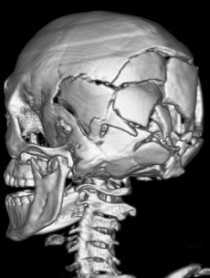
Often such determinations entail autopsies or postmortem examinations, but sometimes these examinations are offensive to the decedent’s religious beliefs or to those of surviving family members. In such situations, it has frequently been the case that the religious beliefs have had to yield to the interests of the government or the public.

A few years ago, Kelly McAndrews (MU Law 2010) and I gave a presentation on religious objections to autopsies at a conference of the Wisconsin Coroners and Medical Examiners Association. (At the time, Kelly was the Medical Examiner for Washington County, Wisconsin.) We noted that, among other groups in Wisconsin, the Hmong and Orthodox Jews would likely have strong objections to autopsies, while that the Old Order Amish, Hindus, and some Muslims, American Indians, and Christian Scientists may have objections ranging from minor to moderate in their intensity.

Potential bases for objection, varying by religion, include: concerns about delay in the preparation and burial of the body as prescribed by religious law or tradition; concerns about the mutilation, desecration, or disturbance of the body (e.g., the body belongs to God and should not be altered, the body is needed intact for successful passage to the afterlife, or the body is needed intact in the afterlife itself); and concerns about spiritual harm to the surviving relatives for failing to take care of the decedent in a religiously proper manner.
Continue ReadingReligious Objections to Autopsies—A Virtual Solution?

Seventh Circuit Affirms Life Sentence Notwithstanding Supreme Court’s Recent Eighth Amendment Decisions

From the time of its decision in Harmelin v. Michigan (1991), affirming a mandatory sentence of life without parole for a drug trafficking offense, through its decision in Ewing v. California (2003), affirming a de facto life sentence for shoplifting, the Supreme Court showed little interest in using the Eighth Amendment Cruel and Unusual Punishments Clause as a basis to limit the length of prison sentences.  More recently, however, the Court has begun to extend the principles it developed to regulate capital sentencing into the noncapital realm.  First, in Graham v. Florida (2010), the Court banned life without parole for juveniles not convicted of homicide.  Then, in Miller v. Alabama (2012), the Court banned the use of mandatory “LWOP” sentences for all juveniles — even those convicted of homicide.

The Court’s trajectory seems to threaten Harmelin.  Even if the logic of Graham permits LWOP for drug trafficking, the logic of Miller arguably requires a consideration of mitigating circumstances before the sentence can be imposed — prohibits, in other words, LWOP as a statutory minimum for a drug offense.

While the Supreme Court might eventually reach this destination, the Seventh Circuit has decided not to try to get there first.  

Continue ReadingSeventh Circuit Affirms Life Sentence Notwithstanding Supreme Court’s Recent Eighth Amendment Decisions

The Law School’s Conference on the Wickersham Commission

On October 4 and 5, 2012, the Law School held its Conference on America’s First National Crime Commission and the Federalization of Law Enforcement. The conference was the brain child of Dean Strang, a member of our adjunct faculty, who was assisted in its planning by Professor Michael O’Hear and me. Attracting large audiences of academics, lawyers, students, and the public, the conference featured lectures by historians, law professors, political scientists, and criminal justice experts.

The conference began with Professor Frank Zimring’s (Berkeley, Law) lecture, “The Accident Crime Commission: Its Legacies and Lessons,” which was delivered under the auspices of the Law School’s Barrock lecture in criminal law. Professor Zimring provided historical insight into the composition, work, and legacy of the so-called Wickersham Commission. His lecture is summarized here.

On October 5 the conference continued with three panels. The first panel provided additional historical perspective on the Wickersham Commission. Delivering papers were James Calder (Texas-San Antonio, Political Science), who placed the Commission’s work in a paradigm of “brain” and “state.” Samuel Walker (Nebraska-Omaha, Criminology) provided an overview of President Herbert Hoover’s life, emphasizing how his support for the Commission was fully consistent with his role as an early twentieth-century Progressive. John M. Cooper, Jr., (Wisconsin, History) commented on the papers while offering additional insights into President Hoover’s progressivism.

Continue ReadingThe Law School’s Conference on the Wickersham Commission