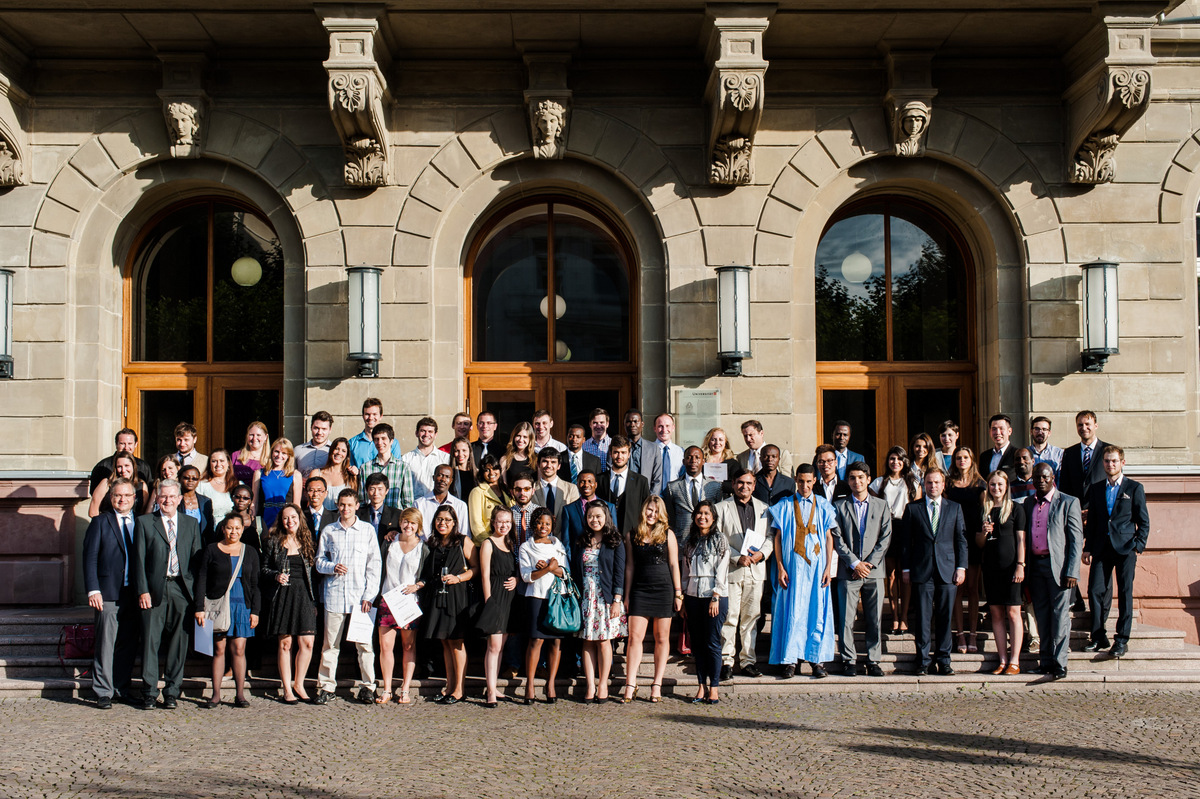
Congratulations to the 2014 Chicago Bar Association Moot Court Teams

Congratulations to 3Ls Stephanie Chiarelli and Adam Dejulio for reaching the octofinals of the Chicago Bar Association Competition this past weekend.  Attys. Kaitlyn Reise and Mindy Nolan coached the team and traveled to the competition.  3Ls Tyler Hall and Jeff Morrell also competed and were coached by Attys. Jaclyn Kallie and Dana Luczak.  All of the coaches are Marquette alumni who competed in moot court.  Professor Rebecca Blemberg advised the teams.

Continue ReadingCongratulations to the 2014 Chicago Bar Association Moot Court Teams

Briefs that Changed the World


brief in Plessy v. FergusonThis semester I had the opportunity to take Prof. Edwards’s class Advanced Brief Writing: Briefs that Changed the World. I must admit that I was slightly skeptical of the idea that simply reading remarkable briefs would somehow make me a better writer. But, I’m happy to admit that I was quite wrong in this assumption. Reading the briefs covered in this class have inspired me to try my hand at the various techniques the authors employ when writing these briefs (I make no promises about whether my attempts have proven successful). Hopefully they will inspire you too. Thank you, Prof. Edwards for allowing me to share this list of briefs:

Miranda v. Arizona (Petitioner)

Bowers v. Hardwick (Respondent)

Gideon v. Wainwright (Petitioner)

San Antonio School District v. Rodriguez (both Petitioner and Respondent)

Wards Cove Packing Co. v. Atonio (both Petitioner and Respondent)

Loving v. Virginia (Appellant)

Aikens v. California (Petitioner)

Furman v. Georgia (Petitioner)

Roper v. Simmons (Respondent)

Meritor Savings Bank v. Vinson (Respondent)

Hernandez v. Texas (Petitioner)

Citizens United v. Federal Election Commission (both Appellant and Appellee)

When Prof. Edwards spoke to the Marquette Legal Writing Society at the beginning of the semester, she advised students to read. Since receiving her advice, I have read every opinion by Chief Justice John Roberts that I can get my hands on. If I can soak in even 1% of his writing style, I will die from pure legal writing happiness. Hopefully these briefs will kick-start your reading and make you think about techniques and strategies you can incorporate into your own writing.

Finally, I highly recommend picking up Point Made: How to Write Like the Nation’s Top Advocates by Ross Guberman. We use this book in Prof. Edwards’s class, and it is simply fantastic.

Continue ReadingBriefs that Changed the World

Barrock Lecture Explores Collision Between Criminal Law and Neuroscience

Morse“Be of good cheer; everything is going to be all right.” With these words last week, Stephen Morse sought to reassure his audience at Marquette Law School that advances in neuroscience will not ultimately upset traditional understandings of criminal responsibility. Morse, a professor at the University of Pennsylvania, was in town to deliver Marquette’s annual Barrock Lecture on Criminal Law. A podcast of Morse’s engaging presentation is here.

Neuroscience is increasingly giving us the ability to understand — and even, in the form of colorful MRI images, to see — some of the specific biological processes in the brain that produce thought and action. This suggests the possibility of “my brain made me do it” defenses, especially in cases involving defendants who have demonstrable neurological abnormalities. If a particular aspect of a defendant’s brain can be identified as a “but for” cause of his criminal behavior, then should not that provide an excuse?

Morse argues that this defense proves too much.  

Continue ReadingBarrock Lecture Explores Collision Between Criminal Law and Neuroscience