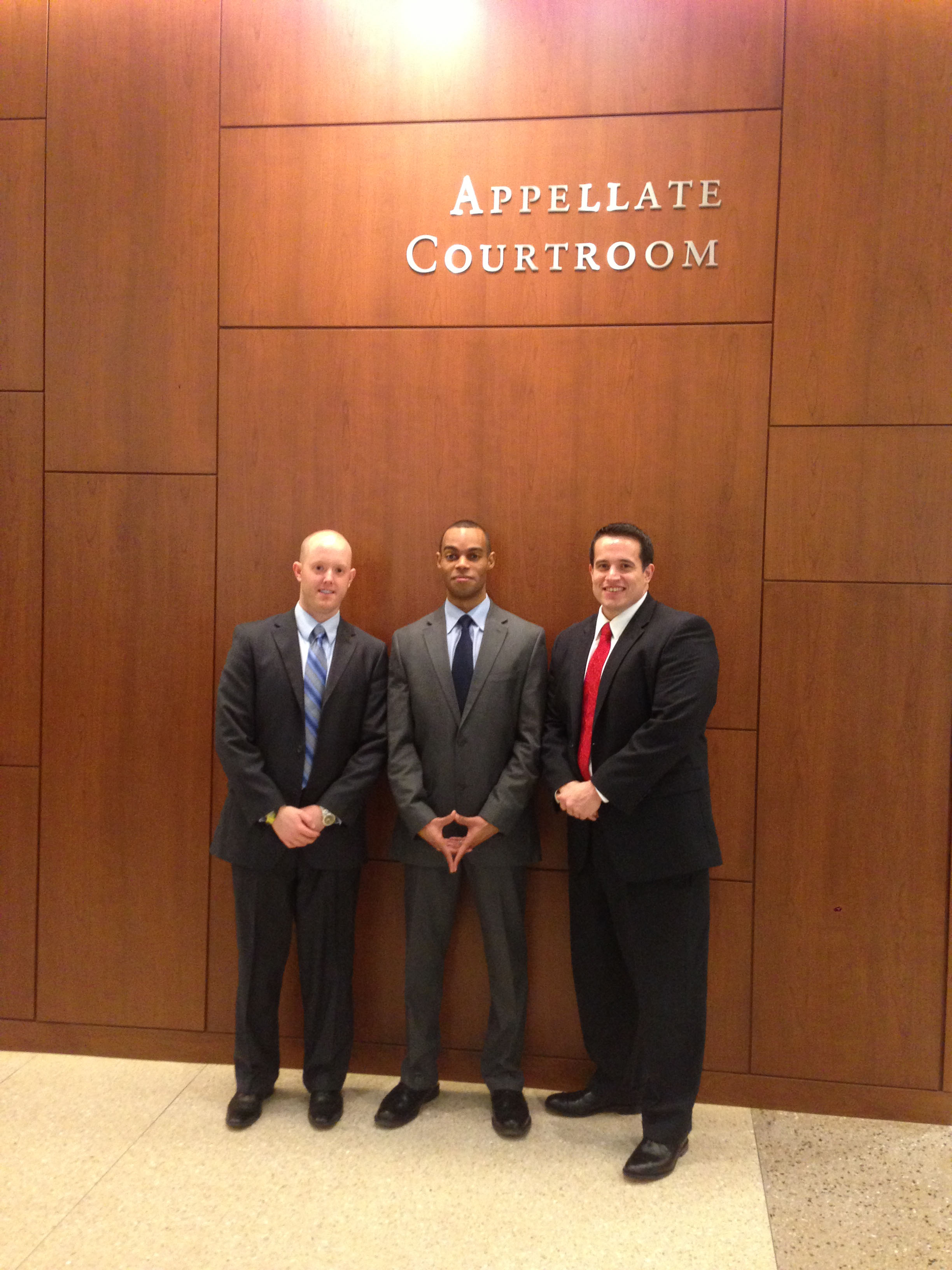
Do Like a Lawyer

The start of the new academic year means a new group of first-year law students, ready for the three-year adventure that is law school. And each fall, those same students hear much about what they’re going to learn in law school. Usually the main thing they hear is that they will learn to “think like a lawyer.”

It’s certainly true that law school will teach students a particular way of thinking critically that will infuse all of their thinking from here forward. It’s also true that lawyers ought to be thinking critically. (So should everyone, in my view.) But law school should do more than teach students how to “think like a lawyer.” It should teach students how to “be” lawyers.

It is on this thought that I am reminded of Steven M. Radke, L’02.  The Law School invited Radke, vice president of government relations at Northwestern Mutual Insurance Co., to speak at its orientation event in fall 2006. Radke gave an entertaining and informative speech to that year’s entering class, the text of which can be found here. At one point, Radke discussed the often-stated law school goal of learning to “think like a lawyer,” a goal, he said, that is a bit troubling, particularly if it suggests that there is a single way lawyers think. He continued,

[I]f, God forbid, I someday find myself being wheeled into an emergency room, I hope the person preparing to operate on me doesn’t just think like a doctor.  I want him or her to be a doctor.

Radke’s point is spot on. Law school should not only teach students how to “think like a lawyer,” but it should also teach students how to be a lawyer. 

Continue ReadingDo Like a Lawyer

Thank You to Michael O’Hear

michaelohearFive years ago Marquette Law School launched this faculty blog. It was then, and has been since, a group project, with posts coming from faculty members, primarily, but others as well, including alumni and students, and comments from just about anyone willing to include his or her name. Yet one person has had more to do with the blog, from its suggestion to its success, than any other: Michael M. O’Hear, professor of law and associate dean for research. Professor O’Hear himself has put up almost 500 posts, variously touching upon Seventh Circuit decisions, Wisconsin law and policy in the area of sentencing, the work of faculty colleagues, and many other topics. His work also has involved leadership beyond such example — to the point that a contributor to the Volokh Conspiracy, one of the most popular law blogs, remarked in 2011 that the Marquette blog is the most frequently updated of any law school faculty blog. It is thus with both gratitude and a bit of anxiety that I relate that Professor O’Hear has handed the reins to another colleague (Professor Bruce E. Boyden). After a half-decade of service as lead editor, Professor O’Hear leaves this blog in good shape, and he is especially eager to turn more of his undivided attention to a book project. To be sure, Professor O’Hear will continue to contribute to the blog, but I wish not merely to note the handoff but also to thank him for his prodigious work on this project for as long as — indeed, even longer than — we have published this blog.

Continue ReadingThank You to Michael O’Hear

Earned Release From Prison: Judges Not Necessarily the Best Deciders

PrisonIn 2009, Wisconsin expanded release opportunities for prisoners and established a new Earned Release Review Commission to handle the petitions.  Just two years later, however, the legislature reversed course, largely repealing the 2009 reforms and abolishing the ERRC. The 2011 revisions effectively returned authority over “early” release to judges. Critics of the ERRC, an appointed body, maintained that it was more appropriate to give release authority to elected judges.

However, last month’s Marquette Law School Poll indicates that Wisconsin voters would actually prefer to put early release into the hands of a statewide commission of experts rather than the original sentencing judge.

Among the 713 randomly selected Wisconsin voters who participated, a 52% majority stated that release decisions should be made by a commission of experts, as opposed to only about 31% who favored judges. An additional 13% stated that both options were equally good. The Poll’s margin of error was 3.7%.

We asked several questions to try to identify more specifically the perceived strengths and weaknesses of both options.  

Continue ReadingEarned Release From Prison: Judges Not Necessarily the Best Deciders