National Pro Bono Week: October 20-26

October 20-26, 2019 is recognized as National Pro Bono Week. For the last ten years, a week in October has been chosen as a way to spotlight the pro bono work done by law students, lawyers, and paralegals across the country.

How did it get started? Back in 2009, the ABA Standing Committee on Pro Bono and Public Service decided to create a coordinated event to highlight The mobile legal clinic bus.the “increasing need for pro bono services during harsh economic times and the unprecedented response of attorneys to meet this demand.” Ever since, it has promoted pro bono activities during October to help increase access to justice and community involvement.

So what is Marquette Law School doing for Pro Bono Week? Well, I first want to mention that the Law School has been committed to public service for a long time. The Office of Public Service is continuing to organize pro bono opportunities, trainings, CLEs, and really just business as usual because serving our communities is engrained in our mission. Almost 70% of our current students have participated in pro bono opportunities and we’ve served thousands of clients over the year.

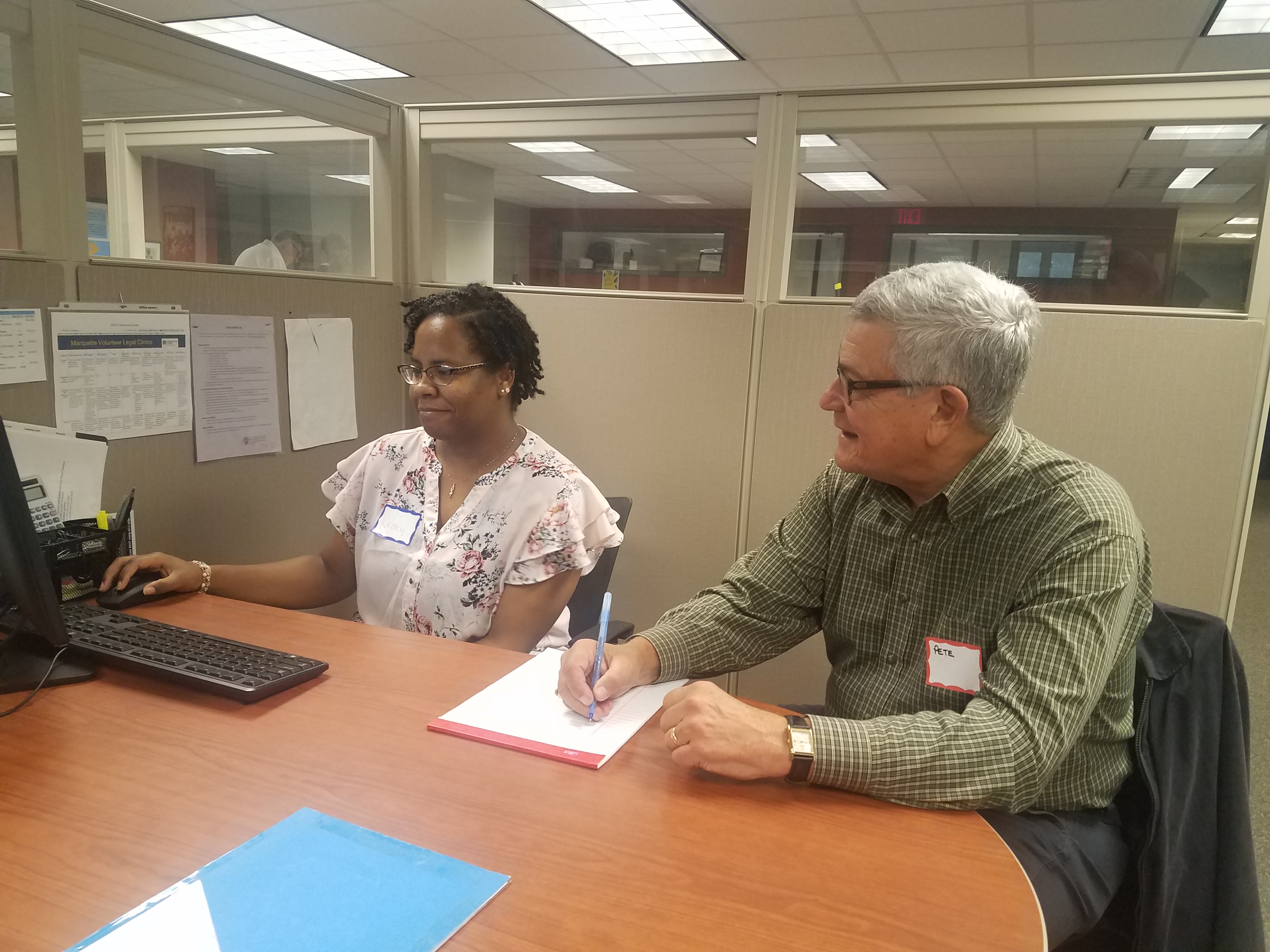
So if you haven’t yet volunteered at one of the many Marquette Volunteer Legal Clinics (MVLCs), traveled on the Mobile Legal Clinic bus, or participated with the Milwaukee Justice Center (which will be celebrating its 10th Anniversary this month), I would encourage our students, faculty, and alumni to sign up for a shift during the week.

But we are also going to use the week to recognize just a few of our volunteers, both current students and alumni. They have put in a lot of time and effort to connect with the Milwaukee community and help increase access to justice. Hear about some of their experiences and find out what motivates them to give their time to this cause. Hopefully it will help inspire you to give back as well.

Continue ReadingNational Pro Bono Week: October 20-26

3L Moot Court Team Sweeps Preliminaries at Elon University Competition

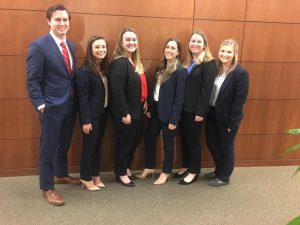
Moot Court students in front of Elon Law sign
From left to right: Luis Gutierrez, Terreea Shropshire, and Nicholas Wanic

In Marquette Law’s first appearance at the Billings, Exum & Frye National Moot Court Competition at Elon University School of Law in Greensboro, North Carolina, three Marquette Law students showed that Team Marquette is a force to be reckoned with.

Luis Gutierrez, Terreea Shropshire, and Nicholas Wanic were one of 40 teams at the competition. Though their brief was not one of the top two in the competition (the only ones awarded honors), they earned a high score that was nearly ten points above the median. Further, they won each of their three preliminaries rounds and advanced to the octofinals.

This competition had a tight turn-around time between problem release, brief deadline, and competition. All three team members stepped up and showed how hard work pays off. Professor Rebecca Blemberg served as the team’s faculty advisor and coach. Other coaches were Attorney Courtney Roelandts (L’18), who also accompanied the team to the competition, and Attorneys Jessica Delgado (L’19) and Sarita (Sadie) Olson (L’19), with Professor Lisa A. Mazzie assisting. Thank you, too, to Attorney Greg Helding (L’14), who served as guest judge.

Congratulations, team, on your accomplishments!


Continue Reading3L Moot Court Team Sweeps Preliminaries at Elon University Competition

How to Succeed in Appellate Writing and Advocacy

courtroomWhile Appellate Writing and Advocacy (AWA) is a challenging class, it provides law students with the fundamental skills necessary for written and oral advocacy. I spoke with 3Ls who had AWA last fall to get their suggestions for current AWA students on how to succeed in AWA, both writing the brief and doing oral argument. Current AWA students, here are some tips for you.

During the writing process, Luis Gutierrez suggests that good topic sentences are a great way to get the reader’s attention. Topic sentences help the reader follow your argument and, if written properly, will persuade the reader.

While Haley Stepanek was writing her AWA brief, she found researching the other side’s helpful case law benefitted her. Not only will this help you craft arguments in your brief, it will help you frame your oral arguments and answer any questions the judges may ask regarding the other side’s arguments. Moreover, Micaela Haggenjos advises you to research whether any recent cases have cited the main case you are relying on for their argument. This will be beneficial while writing your brief and may be helpful during oral arguments because a judge may ask whether any recent cases have cited a case you are relying on.

When the time comes to give oral arguments, Brooke Erickson urges you to treat oral arguments “like a conversation” because the more you engage with the judges, the more natural you are going sound. Brooke also says to focus more on the way you are speaking because if you are able to “defend the indefensible with grace, you can defend anything!”

Adam Vanderheyden suggests that you “breathe and slow down,” while also encouraging you to study the best speakers in history to focus on how they pause. Adam also reminds you that you are the experts on the subject, so make sure to act like it when you are in front of the judges. Knowing you are the expert can help calm your nerves. Julie Leary found that even if you are terrified of public speaking, “being the most well-versed person in the room . . . will make you feel more secure and more confident.”

And, remember, different techniques work for different people. Haley found that signing up for all of the opportunities to give oral argument, including scrimmaging with other teams most helpful, but Julie found that practicing with her partner, her coach, and to her cats, worked best for her. Being cognizant of what works best for you and your partner is key to your success.

Finally, Luis recommends treating the whole experience like you are actually representing a client in the U.S. Court of Appeals. While that may seem intimidating, this will be the best way to get the most out of the course. “Most importantly,” Luis said, just “have fun.”

Continue ReadingHow to Succeed in Appellate Writing and Advocacy