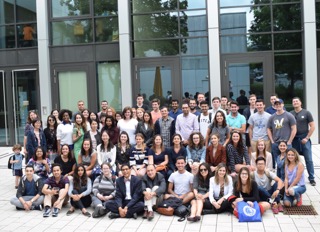
It Is Not Too Early to Plan for Study Abroad in 2018
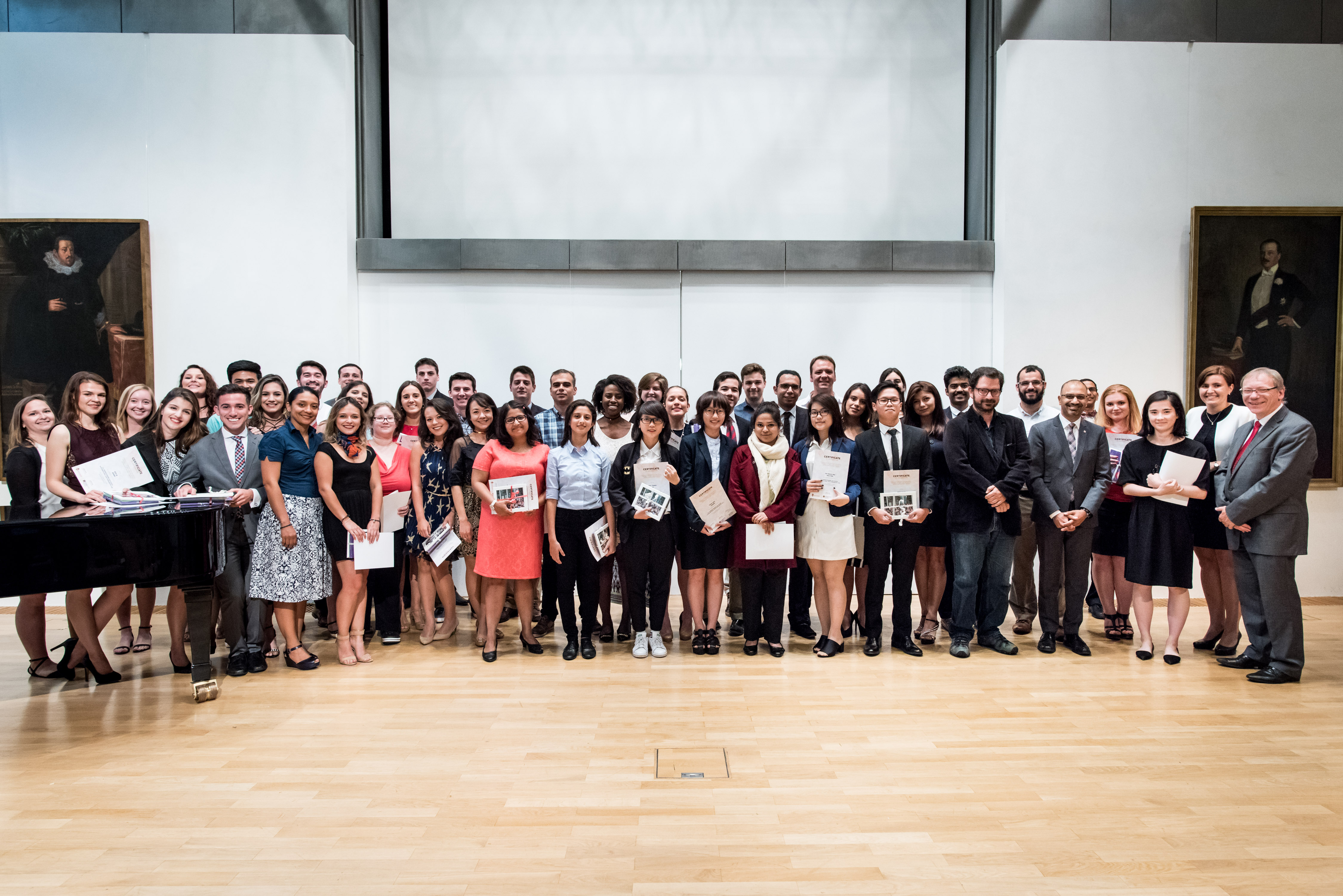
The Ninth Annual Summer Session in International and Comparative Law, one of the nation’s most unique law school study abroad programs, ended with a Closing Ceremony on August 11. The Closing Ceremony was covered by the local newspaper in the town of Giessen, Germany, The Giessener. You can read the newspaper’s story at this link. For those of you who do not speak German, here is a translation of the story courtesy of Google Translate:
GIESSEN – An international atmosphere prevailed in the last four weeks at Justus Liebig University (JLU). During this period, 65 students from 22 nations attended the ninth German Summer School in International and Comparative Law and the 13th Hessen International Summer University (ISU). At the closing ceremony in the university building in Ludwigstrasse, it was necessary to say good-bye.
“I hope that the two programs are the beginning of an intense relationship between you and Germany and that this is not your last visit here,” JLU President Prof. Joybrato Mukherjee wished in his welcoming speech. For him, the academic exchange is very important, especially since in Giessen it is also part of a particularly long tradition. For already University namesake Justus von Liebig had brought together international scientists at the University of Giessen. Professor Thilo Marauhn was delighted that this tradition has been preserved to this day. The holder of the Chair of Public Law and International Law was impressed by the fact that “so many students from so many countries come to Giessen to learn together here.” He was proud to say that the “summer schools” were so much international. “They are at the heart of our international exchange programs and help to make Giessen known everywhere.” Prof. Anuj Desai from the JLU partner University of Wisconsin Law School praised the programs as “an important cooperation between the universities, which is organized by the JLU in an outstanding way”. Program coordinator Magdalena Jas-Nowopolska also emphasized: “The programs mean not only mean studying, but also bringing together people from different countries.”
When the certificate was given, each participant was celebrated loudly during the walk across the stage. But there was also a little melancholy in the air, for the time spent in Germany had come to an end. For some, however, this does not mean a farewell forever. Laura Catalina Guerrero from Colombia wants to apply for a master’s degree in Hamburg. “In the past four weeks, I’ve been totally in love with Germany, and there is so much to see and learn,” said the 23-year-old criminologist. But she will miss the time in Giessen because it is such a “dynamic and student-perfect city”. Bhagirath Singh Ashiya from India feels similar. “I liked it here very much,” enthused the 23-year-old law student. He was particularly impressed by “the transparent legal system and German efficiency”. But most of all, the many green areas in the cities fascinated him. “We do not have that at home”.
After the ceremony, the students celebrated one last time with their newly won friends until late in the evening. Because the next morning it was time to say good-bye and return to their respective home countries. Both programs were organized by the Franz von Liszt Institute at the JLU Faculty of Law.