
New Controversies in Wisconsin Administrative Law

Administrative law is enjoying a moment in the sun. Take, for example, the attention recently paid to the subject by the United States Supreme Court, which in a series of opinions (Loper Bright, Corner Post, andJarkesy) marked out a new path forward with respect to important aspects of federal administrative law. This post concerns noteworthy developments in the same field in Wisconsin. At both the federal and state levels, it has become clear that modern administrative law cases often involve disputes over very significant and substantive regulatory power, even when cloaked in what may seem to be procedural minutiae.

in recent years. I explored the topic in a series of writings, beginning in September 2017 with a post titled “The Quiet Revolution in Wisconsin Administrative Law.” My purpose was to point out what I perceived as a significant makeover in longstanding principles of administrative law in the state, shifting power away from agencies and toward courts and the legislature. Eight years have passed since then, and while the ground has certainly shifted, the fundamental questions remain the same, relating to the uneasy balance of power between Wisconsin agencies, the Wisconsin state legislature, and Wisconsin courts.

The Wisconsin Supreme Court has twice acted to counter the trends I noted in the original post, restoring some of the discretion Wisconsin agencies historically enjoyed. First, as I described in a 2021 post, the court decided two cases (both captioned Clean Wisconsin v. Wisconsin Department of Natural Resources (2021 WI 71 and 2021 WI 72wi)) to address the scope of Wis. Stat. § 227.10(2m). That statute provides that no agency may implement any “standard,” “requirement,” or permit condition unless the condition has been “explicitly required or explicitly permitted’ by statute or by rule. The Clean Wisconsin cases turned on a question of statutory interpretation: whether “explicit” means “specific,” in other words, whether under § 227.10(2m) the agency’s contested authority must be spelled out via “literal enumeration or verbatim mention” of the conditions in a statute or rule, or whether the authority must simply be “expressly conferred and clear.”

The court concluded that even when no statute or rule spells out verbatim the agency’s authority to impose certain disputed permit conditions, an agency “may rely upon a grant of authority that is explicit but broad when undertaking agency action.” Such broad grants of authority, the court found, comply with the requirements of § 227.10(2m). For example, statutes conferring on the Wisconsin Department of Natural Resources (WDNR) “general supervision and control over the waters of the state” and all “necessary powers” to protect the waters of the state, provided sufficiently “explicit” authority for WDNR to impose specific conditions related to groundwater monitoring on a permitted well.

Most recently, this summer the Wisconsin Supreme Court issued its opinion in Evers v. Marklein II, striking down the authority to pause, object to, or suspend administrative rules held by the powerful legislative Joint Committee for Review of Administrative Rules (JCRAR). This was another power shift that I discussed in my 2017 post. The basis for the court’s new ruling was a rather technical matter: JCRAR’s authority to block, suspend, and object to administrative rules was tantamount to legislative action, and therefore failed the constitutional requirements of bicameralism (a bill must pass both houses) and presentment (the bill must be provided to the governor for signature). Technical grounds notwithstanding, Evers v. Marklein II appeared to significantly reduce the legislature’s power to check agency action.

But rather than putting things to rest, the ruling touched off a new round of political maneuvering. First, Democratic Governor Tony Evers sought to finalize a set of new administrative rules without first submitting them to the JCRAR, citing the court’s opinion. Republican leaders responded with a plan to order the Legislative Reference Bureau not to publish any rules prior to review by legislative standing committees, arguing that the court’s opinion removing some authority from the JCRAR did not eliminate review of administrative rules by standing committees. The LRB director agreed, telling a media outlet that “If [the Joint Committee on Legislative Organization] so directs, the LRB will not finalize or publish any proposed administrative rules that have not completed standing committee review.” Many of the rules – which concern various aspects of important state policies – remain in limbo for now.

While the debate over the authority of Wisconsin administrative agencies currently pits the Republican legislature against the Democratic executive, there is always the possibility that those positions could be reversed in the future – just as has happened at the federal level, with a Republican-led EPA now seeking to impose the most ambitious deregulatory agenda in history. For that reason alone, this delicate balance of authority should be examined on more than partisan political terms.

Continue ReadingNew Controversies in Wisconsin Administrative Law

Examining the “System” in Criminal Justice Reform, Part 2: Measuring Justice with Primitive Scales

Wayne McKenzie
Wayne McKenzie

In my immediate previous post, I highlighted some of the motivating inspirations for creating a particular platform in 2007: the Milwaukee County Community Justice Council. The desire was to examine our criminal justice system and to invite external partnerships to help us identify efforts from different systems that might help inform our desire to improve the Milwaukee “product” of justice.

Hidden in the request for help was a perhaps naive presumption that some system somewhere was “doing justice the right way”—such that our need was to discover it, adopt or adapt it, and make it our own. The reality in 2007 (and today) is that there are approximately 2,330 state-level criminal justice systems representing diverse populations and operating in myriad legal and cultural systems sometimes very different from Milwaukee. All are presumably trying in good faith to justly serve their particular communities. And while many of the dynamics of “the criminal justice system” are similar everywhere in the United States, you will find important nuances just by traveling outside your home county.

In all events, given the complexity and deeply structural challenges of the American legal system, how do you objectively identify a problem in your ecosystem, assess what might fix the problem, implement a reform, measure the impact of the effort, and then demonstrate a narrative of progress? Such a process comes with abundant loaded assumptions, each one challenging enough to derail any effort at reform (which helps explain why so few jurisdictions even try).

But perhaps the biggest issue confronting reform-minded practitioners can be distilled to this essence: the challenge of adequately and accurately capturing meaningful data.

Unifying all criminal justice systems in the past and no less in the present are grossly inadequate information management systems combined with sparse analytical capacity. One of the guiding principles adopted early in the Milwaukee reform process is captured by the phrase “You can’t effectively change what you don’t effectively measure,” and while the information collection process has been revolutionized in a short time, effective analysis remains a challenge to most systems.

The Milwaukee County justice ecosystem circa 2006 was predominately an analog, paper-based system. If you practiced criminal law in the 1960s and returned for a day as late as 2010, you would still recognize all the processes and procedures required to represent a client or prosecute a case. Data and information processing systems (including software at the later date) were a hodgepodge of commercial and proprietary products, with the police departments, sheriff’s office, prosecutors, courts, and corrections system all using different means to capture and store the information needed in their respective sphere, but rarely with any interoperability with other agencies. In a pre-Cloud, pre-AI world, a researcher needed to physically enter the space where the work unfolded to even attempt to capture data, and nonetheless he or she would be disappointed in the quality of the information.

Despite the obstacles, in 2005 the Milwaukee County District Attorney’s Office opened itself to outside, independent researchers. This occurred when the Vera Institute of Justice reached out and asked to be allowed to enter the complicated and risk-averse space of the elected prosecutor. It did so on a topic that was and is considered a third rail of police and prosecution controversy: race.

Continue ReadingExamining the “System” in Criminal Justice Reform, Part 2: Measuring Justice with Primitive Scales

Will Wisconsin Chart Its Own Course on Environmental Issues?

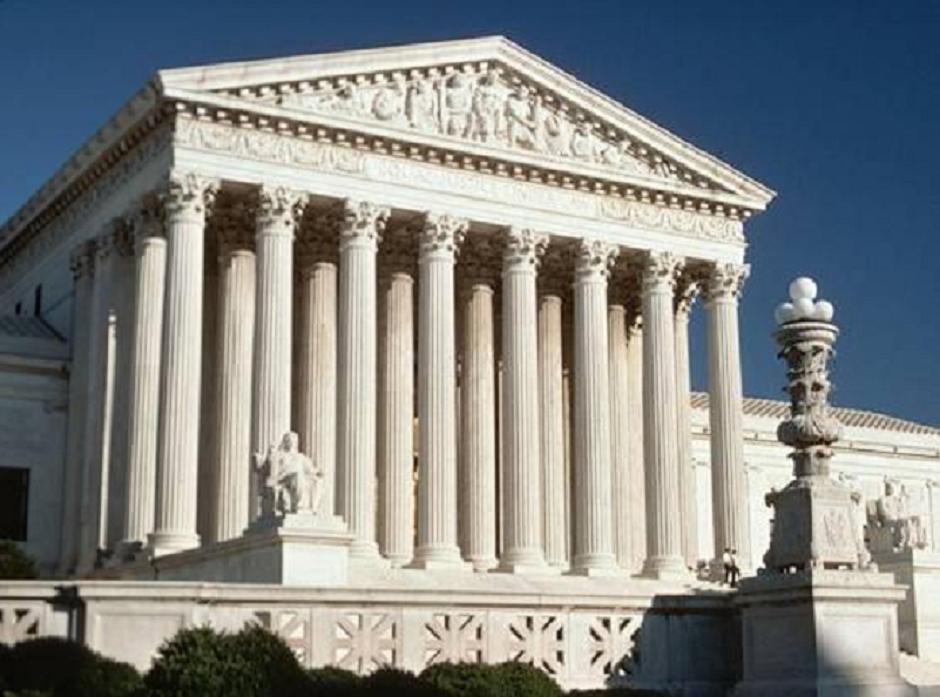
The exterior of the U.S. Supreme Court building with white stone columns and a white facade.

In a series of recent cases, the United States Supreme Court has sharply restricted the power of the United States Environmental Protection Agency to effectively exercise jurisdiction over natural resources within the states. These include West Virginia v. EPA (endorsing the “major questions doctrine” and restricting EPA’s power to require cleaner energy generation without clear congressional authorization); Sackett v. EPA (limiting the scope of EPA’s authority over “waters of the United States,” and eliminating federal authority over many wetlands); Loper Bright Enterprises v. Raimondo (overruling the Chevron doctrine of deferring to agency interpretations of law in most circumstances); SEC v. Jarkesy (holding that agencies may not employ in-house tribunals, in lieu of jury trials, when seeking civil penalties); and Corner Post v. Board of Governors, FRS (pausing the statute of limitations to challenge agency regulations until the plaintiff suffers injury).

The shift away from federal power elevates the role states can play in charting a course on environmental issues. The Sackett Court emphasized that states, not the EPA, hold the “primary responsibilities and rights . . . to prevent, reduce, and eliminate pollution” and “to plan the development and use . . . of land and water resources.” Some evidence supports the idea that states will be eager to fill gaps in federal regulation of the environment and corresponding enforcement activities. Wisconsin, for example, has a rich history of water law. All the way back in 1853, the Wisconsin Supreme Court endorsed the principle that “if [a] stream is navigable in fact, the public have the right to use it for the purposes of navigation, and the right of the owner [of abutting land] is subject to the public easement.” Jones v. Pettibone, 2 Wis. 308 (1853). In the 20th century, the state became a national leader in conservation and was at the vanguard of the development of the public trust doctrine.

Even in the 21st century, Wisconsin authorities have sometimes stepped in to protect the state’s natural resources when federal jurisdiction receded. In 2001, for example, the Supreme Court invalidated the “migratory bird rule,” under which federal agencies had exercised jurisdiction over pollutant discharges into certain isolated intrastate waters. The decision, Solid Waste Agency of Northern Cook County v. U.S. Army Corps of Engineers, removed a sizeable percentage of wetlands from federal protection. The Wisconsin Legislature acted almost instantly, taking only a few months to enable state control over such discharges by creating a new category of “nonfederal wetlands.” The state law expressly addressed the Supreme Court’s decision. By its terms, it applies when discharges into wetlands are determined “not to be subject to regulation under [the federal Clean Water Act] due to the decision in Solid Waste Agency of Northern Cook County v. U.S. Army Corps of Engineers . . . or any subsequent interpretations of that decision by a federal agency or by a federal district or federal appellate court that applies to wetlands located in this state.” Wis. Stat. 281.36(1m)(a)1 (as created by 2001 Wisconsin Act 6). The act effectively restored protection of wetlands that the Supreme Court removed from federal jurisdiction in SWANCC, albeit under state authority. Later, the state implemented an innovative water quality trading program to help curb nonpoint source pollution and meet the state’s aggressive water quality limits for phosphorous pollution. Wisconsin citizens can be proud of the state’s progress in those areas and many others.

But more recent developments are less promising. The ballyhooed “Year of Clean Drinking Water in Wisconsin” was less successful than Governor Evers probably hoped. Similarly, after Assembly Speaker Robin Vos created a “Water Quality Task Force” in 2019, all thirteen of the bills it proposed died in the state Senate. In 2017, the Legislature removed some smaller wetlands from protection under state law, backtracking from the 2001 enactment. And the past few years have been marked by political skirmishes over the power of state agencies to enact groundwater standards for PFAS and other chemicals, disputes over the Department of Natural Resources’ power to require environmental cleanups, and the delayed release of state funds earmarked for remediation activities.

Wisconsin’s uneven record on environmental protection is certainly not unique. But the state–or rather, all the states–are being thrust to the forefront in such matters. Of course, a state will not necessarily regulate anew, or step up enforcement, just because it has the opportunity to do so. And any reckoning with environmental issues will no doubt have to wait until after the November elections currently dominating politics. Whenever the dust settles, it will be interesting to see how states respond in the new era of a somewhat-diminished EPA.

Continue ReadingWill Wisconsin Chart Its Own Course on Environmental Issues?