More Help Urged for Those Making “Re-entry” from Incarceration

“When does the sentence end?“  Albert Holmes says he often faces that question as he works to help people who have been released from incarceration and who are re-entering the general community.

Holmes, president and CEO of My Father’s House, was one of the speakers Thursday, Oct. 4, at a conference at Marquette Law School that focused on what can be done to provide paths for more people in those situations to establish stable lives.

The conference, “Racial Inequality, Poverty, and Criminal Justice,” drew an audience that included two Wisconsin Supreme Court justices, several circuit judges, prosecutors (including Milwaukee County District Attorney John Chisholm),  defense attorneys, and many who work in agencies that try to help those getting out of prison or jail or who are advocates on issues involved with the subject.  

Continue ReadingMore Help Urged for Those Making “Re-entry” from Incarceration

Bitcoin and Money: An Advocate’s View

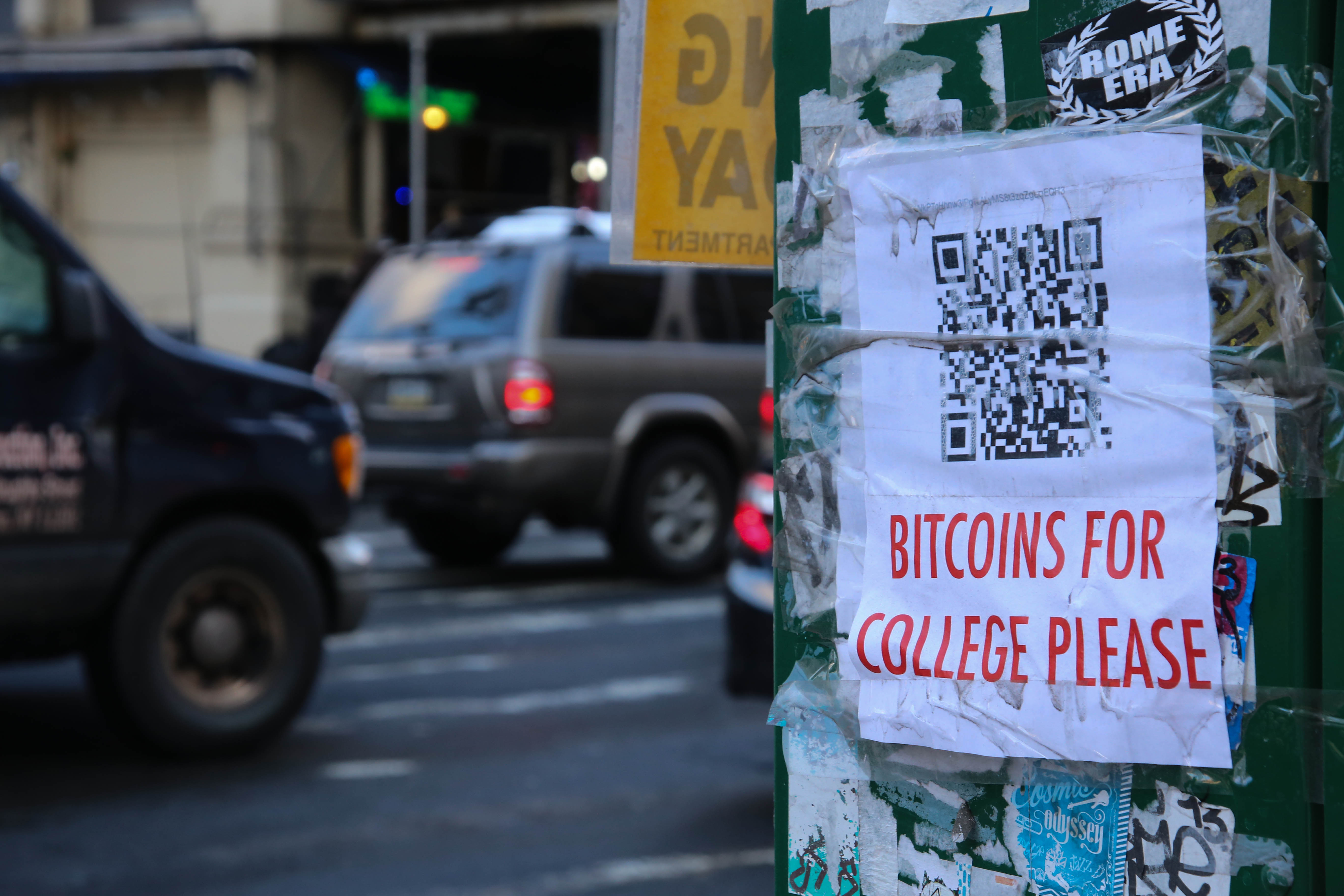
Photo of a lampost with a paper flyer taped to it asking passerby to send bitcoins to pay for college.Some refer to Bitcoin as the internet of money. Why? Because they believe Bitcoin will revolutionize the way we transact with each other the same way the internet revolutionized the way we communicate with each other. Some critics argue otherwise. But, quite interestingly some of Bitcoin’s biggest critics are the same institutions and industries that stand to be disrupted by Bitcoin. To some, the idea of Bitcoin replacing our current mediums of exchange is too far-fetched. I would argue that our mediums of exchange throughout history have suffered arguably more drastic changes. As a human race we went from bartering, to exchanging precious metals, to paper money, and most recently to plastic cards with magnetic strips.  How do you think people reacted when they were told they would not be buying and selling goods with precious metals, but instead they would be using paper? This was a substantial aberration in the manner people transacted with each other, and it took hundreds of years for there to be consensus on this transition.

On that note, what is Bitcoin? Most people will say that Bitcoin is a digital currency. While at its essence this is not a false statement, if Bitcoin is simply a digital currency it would be inconsequential. Most of our currencies today are already digital. Bank accounts today are digital databases, and we use those bank account to transfer money to and from each other, in electronic form. That is digital money. The reality is that only about 8% of total world currencies exist in physical form. It would seem that if Bitcoin is as revolutionary as some claim, it would need to offer something beyond the digitalization of money, and it does. Let’s discuss some of these characteristics and possibilities.

Continue ReadingBitcoin and Money: An Advocate’s View

Congratulations to AWL Scholarship Winners Seymour and Brisco

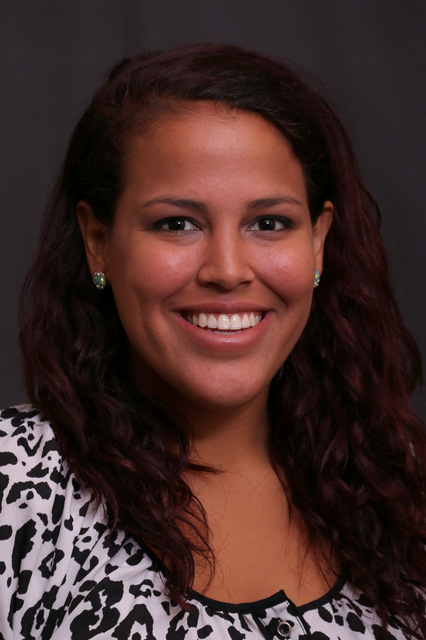
Taylor Brisco and Christa Seymour
Taylor Brisco and Christa Seymour at the AWL Annual Luncheon.

Yesterday, September 25, 2018, the Milwaukee Association for Women Lawyers (AWL) Foundation honored two Marquette University Law School students with scholarships.

Christa M. Seymour, 2L, received the AWL Foundation scholarship. The AWL Foundation Scholarship is awarded to a woman who has exhibited service to others, diversity, compelling financial need, academic achievement, unique life experiences (such as overcoming obstacles to attend or continue law school), and advancement of women in the profession. As a child, Seymour moved from South Milwaukee to Rio, Wisconsin, a small town in the northern part of the state with just over 1,000 people (as 2010). She completed her undergraduate degree at UW Madison, and in the next 13 years, she worked in business and became a mother to four children. When she started law school—13 years after finishing her undergrad degree—Seymour’s children were between 2 and 8 years old. On top of a busy life with a family and law school, Seymour works with the Milwaukee Justice Center, volunteers with the Domestic Violence Injunction project, and is involved in student associations. Seymour said she wanted to be an example of where hard work and perseverance can take someone, and to be that example for her children and for others.

Taylor Brisco, 3L, received the AWL Foundation’s Virginia A. Pomeroy scholarship. This scholarship honors the late Virginia A. Pomeroy, a former deputy state public defender and a past president of AWL. In addition to meeting the same criteria as for the AWL Foundation scholarship, the winner of this scholarship must also exhibit what the AWL Foundation calls “a special emphasis, through experience, employment, class work or clinical programs” in one of several particular areas: appellate practice, civil rights law, public interest law, public policy, public service, or service to the vulnerable or disadvantaged. Brisco, a former sports journalist, is the first African American woman to serve as Editor-in-Chief of the Marquette Sports Law Review. Last spring, she received the Anne Wall “Ethics in Sports Law Writing Competition” Award for her essay about unethical practices of player re-entry in the National Football League and how to fix those practices. Brisco is currently the legal intern for the West Allis City Attorney’s Office and the legal intern for the Milwaukee Bucks. In addition to pursuing a sports law certificate here, she is also completing her master’s degree in dispute resolution from Pepperdine University. Somehow, Brisco still finds time to be a research assistant for Professor Mazzie, participate in mock trial, serve as a student ambassador for the law school Admissions Office, and volunteer for the Marquette Volunteer Legal Clinic.

Congratulations to both women for outstanding service and for their representation of Marquette University Law School.

Continue ReadingCongratulations to AWL Scholarship Winners Seymour and Brisco