Whatever success he may have in regard to health care reform, economic recovery, or the war in Afghanistan, President Barack Obama has already demonstrated that his ability to influence the world of sport is quite limited. His unsuccessful efforts to convince the International Olympic Committee to award the 2016 Summer Olympics to his adopted hometown of Chicago have been well documented in recent days.
Furthermore, his call for college football to institute a playoff system to determine the champion of what most people still call Division 1A football has fared no better. Although such a change has admittedly not been a top priority of Obama’s administration, he did quite openly throw his support with those opposing the current BCS championship system (based on polls and giving priority to the teams that make up the six so-called BCS conferences) both during the campaign and after he was elected.
Support for Obama’s position seemed to congeal at the end of the 2008-09 college season when the BCS formula left undefeated University of Utah out of the BCS championship game and undefeated Boise State and Texas Christian University (which would finish the season ranked #7 in the country in the AP poll) out of BCS bowl games altogether.
On January 9, 2009, eleven days before Obama’s inauguration and the day after one-loss Florida defeated one-loss Oklahoma for the BCS championship, Rep. Joe Barton of Texas, the ranking Republican on the House Energy and Commerce Committee, introduced a bill that would prohibit as a “deceptive practice” the promotion of a postseason NCAA Division I football game as a national championship game unless it was the final game of a traditional playoff. Barton represented a district that abutted Fort Worth, the home of TCU, and his bill was co-sponsored by fellow Texas Republican Michael T. McCaul and the peripatetic former Black Panther Bobby Rush (D-IL), whose constituents include Barack and Michelle Obama.
Six days later, Democrat Neil Abercrombie of Obama’s native Hawaii proposed a somewhat less dramatic approach when he introduced a nonbinding resolution calling for a playoff system and for a Justice Department investigation into the legality of the BCS system under the federal antitrust laws. Abercrombie’s resolution was endorsed by Lynn Westmoreland (R-GA), Jim Matheson (D-UT), and Michael K. Simpson (R-ID), all of whom represented districts lacking teams in BCS conferences. The following day, a third bill was introduced, this time by Republican Gary Miller of California. Rather than label the BCS system a fraud (as Barton’s bill would do) Miller’s proposal denied all federal funds to schools in the Division I Football Bowl Subdivision unless the championship game resulted from a playoff system.
However, the movement to force the NCAA to adopt a playoff system quickly ran out of steam once the new president was inaugurated. Although Barton and Miller endorsed each other’s bills and Abercrombie’s resolution, and Abercrombie signed on as a co-sponsor of Miller’s bill (but not Barton’s), only two other congressmen, Ken Calvert (R-CA) and John Carter (R-TX), subsequently endorsed any of the above legislation. Barton and Miller’s bills both died in committee in January while Abercrombie’s resolution was apparently tabled in March. Hearings conducted in May by the House Energy and Commerce Committee’s Commerce, Trade and Consumer Protection Subcommittee attracted almost no attention.
The idea that Congress might intervene on behalf of a playoff was briefly revived in July when Sen. Orrin Hatch of Utah, the ranking Republican on the Senate Judiciary Committee’s Subcommittee on Antitrust, Competition Policy and Consumer Rights held hearings on the legality of the BCS system. Although Hatch’s hearings primarily focused on the possibility of the Justice Department prosecuting the NCAA under the federal antitrust laws, they appeared also to revive the idea of direct congressional intervention. During the Hatch hearings, Congressman Barton, who had earlier denounced the BCS as a form of Communism, predicted that if the NCAA did not adopt a playoff system by the start of the next season, Congress would intervene and impose one itself.
Well, the NCAA did nothing, and Congress followed suit. The president, presumably, was busy with other matters.
Given the reluctance of Congress to interfere with the sports industry, even after 50+ years of investigatory hearings, in matters of franchise relocation, expansion, pay television, and performance-enhancing drugs, it would have been shocking had it been moved to act in regard to what is clearly a matter of style rather than substance.
But now that he has two strikes, the president should be careful before he takes another swing at the sports industry.
[Thanks to John Foust for bringing several misspellings in the original version of this post to our attention. Eds.]

 With the beginning of the 2009-2010 term of the Supreme Court, the Marquette Chapter of American Constitution Society for Law and Public Policy (ACS) spent a lunch-hour discussing some of the more interesting cases of the past 2008-2009 term. Leading the lunch discussion were Marquette professors Blinka, McChrystal, and Secunda.
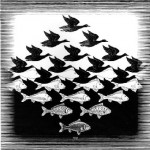 Some people dislike the game of soccer. They observe the players running around on the field and it all seems like random chaos. Soccer aficionados, however, are not focusing on the players. They are watching the spaces in between the players. These empty spaces ebb and flow, like waves in the ocean, creating momentary opportunities for the attacking side.