The Grapes of Roth

My latest article, “The Grapes of Roth,” has just come out in print in the Washington Law Review. In it, I argue that copyright law passed through at least three important phases over the course of the last century, in which judges struggled in different ways with the process of how to determine whether two works are infringing. This periodization of copyright decision-making is, I believe, insufficiently appreciated; copyright lawyers, scholars, and students tend to read cases from any era as going about the decision-making process in the same way. The goal of the article is to focus more attention on how decision-making has varied over time, and to at least begin the discussion of which era’s procedure is closer to optimal.

The title is a reference to the old copyright chestnut Roth Greeting Cards v. United Card Co., in which the majority concluded that infringement was the right call based on the shared “total concept and feel” of the plaintiff’s and defendant’s greeting cards. The “total concept and feel” standard from Roth is one that copyright lawyers love to hate. The phrase is nearly meaningless: concepts are explicitly excluded from protection under 17 U.S.C. § 102(b), and copyrighted works are distinct from any physical embodiment, meaning they have no “feel.” The influential Nimmer treatise has for decades reproached the standard as “invit[ing] an abdication of analysis.”

So why is it so popular? Judges seem to have no qualms about using it, no matter what the commentariat says. They have cited it regularly as the standard for infringement in cases involving non-identical works from the 1980s to the present day. Indeed, it has found its way into jury instructions: juries are commonly told, without further elaboration, that two works are infringing if one was copied from the other and they share the same “total concept and feel.” The answer to this puzzle, I argue, sheds light on the transition from the first phase to the second, and reveals the trap sprung (or the “grapes” pressed) in the third.

Over the next several days I’m going to serialize the article here. I’ll cover in somewhat less detail (but with more images!) the three historical phases I identify, and then wrap up with a concluding post on whether those phases are limited to copyright law.

Continue ReadingThe Grapes of Roth

Kimo Ah Yun Describes His Path to Marquette’s Presidency—and the Path to Marquette’s Future

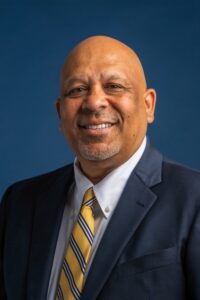
Kimo Ah YunKimo Ah Yun calls his personal history an “underdog story.” He was one of the large number of young people across the United States who had the ability to do big things, but who came from circumstances where doing them was rare.

A child of parents who did not graduate from high school, a native of low-income Compton, Calif., someone who learned lessons about life from pumping gas. He became a first-generation college graduate who didn’t really know what grad school was, but who had mentors who put him on paths to a master’s degree, a doctorate, a professorship, a deanship, a provostship, and, now, the presidency of Marquette University.

Ah Yun thinks about all those who didn’t make it the way he has. During a “Get to Know” program at Marquette Law School’s Eckstein Hall on Jan. 17, he described his own path. “I never expected to be sitting in this chair next to you,” he told the program’s moderator, Derek Mosley, director of the Law School’s Lubar Center for Public Policy Research and Civic Education. But Ah Yun added, “I think about all the people who could have had that opportunity, and for some reason could not see it.”

He recalled a woman who was a schoolmate of his. She was “a phenomenally brilliant person,” he said. “She was smarter than every one of us in school,” he said. “But she never saw it. . . . If you don’t see the pathway, you can never get there. She could have done anything she wanted to, but she did not ever see a pathway for her.”

One of his roles as the 25th president of Marquette is to help more people get on that pathway and to help all students, regardless of their backgrounds, to become the best people they can be. To Ah Yun, that is the heart of Catholic, Jesuit education and the heart of what he was inspired to do by his close friend and predecessor as president, Michael Lovell, who died in June 2024.

Ah Yun told an audience of about 200 that getting an education so you can get a job is important, but that’s far from all Marquette wants its students to set as a goal. Jesuit education means “changing fundamentally who you are as a person and how you interface with the world.” It means making sure you have a moral compass that tells you what is right and what is wrong. It means growing to be someone who cares about others and who is engaged in helping others. “A Jesuit education, to me, is positioning you to have a great life” and to make everyone around you better, Ah Yun said.

Of all the universities in America, Marquette, he said, has the highest percentage of students who are involved in public service. That was at the top of Ah Yun’s list of positive things about Marquette. Asked by Mosley what he most relishes about his job as president of Marquette, Ah Yun said, “Telling our story. We have a great story.”

But he also said that, like all universities, Marquette is facing headwinds as the world of higher education changes, including demographic trends that point to a smaller pool of students in coming years. “We’re going to have rethink things,” he said. While still focusing on students, Marquette is going to have to pull back on some things. For colleges as a whole, including Marquette, there will be “hard decisions, hard times, very disruptive,” Ah Yun said. He pointed to colleges in the United States that have closed in the last several years and mentioned Cardinal Stritch University in Fox Point as one of them.

Ah Yun’s path to Marquette is in itself a colorful story, even without reference to his challenging earlier years. He had been a professor in communications for two decades at California State College, Sacramento, where he got his bachelor’s degree. “I never thought I would ever leave there because it was home,” he said. But he was contacted by representatives of a search firm that was aiming to find a new dean for Marquette’s Diederich College of Communication. He put them off, saying he wasn’t interested. But they were persistent. They convinced him to at least visit Marquette. He agreed but, he said, “I didn’t bring a suit,” because he didn’t intend to take the job. And the night before his interview, he went to a Marquette basketball game rather than prepare for the next day’s session.

He described aspects of his conduct during the interview as somewhat “snarky.” He said, “I wasn’t trying to impress anyone.” But he was invited back for a second interview. He told the search firm representative he had no interest in the job and had a lot of personal reasons to stay in California. But they convinced him to come back and to bring his wife along. He began to take it more seriously.

The key turning point was when Ah Yun was taken to meet Lovell. “He was inspiring,” Ah Yun said. “We were aligned in thinking about a student-centered university that was focused on transforming the lives of our students.” His attitude changed, “I knew I could come work for Mike,” he said. And it went beyond that: “I said I could be a better person if I worked with a guy like that.”

Ah Yun became the communication dean and later the interim provost of the university and then the provost in 2019. After Lovell died, Ah Yun was named interim president and, in November 2024, in his ninth year with Marquette, he was named president.

Marquette needs to stick to its core competencies, he said. It’s not a university that aims to succeed by building online education. It’s an in-person university. “We engage and transform people,” he said. Marquette’s leaders will need to do things ahead that show how they care for the institution itself—but also show that the university has “a foundation where we teach people to love one another.”

Video of the one-hour conversation with Ah Yun may be viewed by clicking here.

Continue ReadingKimo Ah Yun Describes His Path to Marquette’s Presidency—and the Path to Marquette’s Future

Justice After Genocide: Rwanda’s Journey Towards Accountability and Healing

This is the fourth in an occasional series of blog posts occasioned by a visit to Rwanda this past summer. The first, second, and third can be found at the included links.

In 1994, Rwanda was the epicenter of one of the most brutal genocides in modern history. Over the course of 100 days, a staggering number of Tutsis and moderate Hutus were slaughtered in a wave of ethnic violence. Afterwards, Rwanda confronted an immense challenge: delivering justice to the perpetrators of the genocide while nurturing healing in a nation shattered by mistrust and deep, unrelenting trauma.

This journey toward justice was not singular but multi-faceted, involving both international mechanisms and traditional practices that collectively addressed accountability and reconciliation. Central to this journey were the International Criminal Tribunal for Rwanda (ICTR), traditional Rwandan courts, and Gacaca, each playing a distinct role in the nation’s post-genocide recovery.

The International Criminal Tribunal for Rwanda (ICTR) and the ICTR Appeals Chamber

In the immediate aftermath of the genocide, the international community recognized the need for a tribunal to address the most egregious crimes committed during the genocide. In November 1994, the United Nations Security Council established the International Criminal Tribunal for Rwanda (ICTR), with its seat in Arusha, Tanzania, and offices in Kigali, Rwanda. Its mandate was clear: to prosecute high-ranking officials and individuals responsible for orchestrating the genocide as well as for other crimes against humanity. The ICTR also had an Appeals Chamber located in The Hague, Netherlands.

In 2007, then Chief Justice Shirley Abrahamson of the Wisconsin Supreme Court and I joined judges from around the world at The Hague for an international criminal courts conference, visiting the ICTR Appeals Chamber. A year earlier, the Chamber had formally recognized the 1994 genocide against the Tutsi. At the time, I didn’t imagine I would ever again hear about the genocide in such a profound and personal way. Seventeen years later, in Rwanda, I met survivors and perpetrators who shared stories of atrocities, forgiveness, and healing, as partly recounted in past blog posts.

The ICTR’s significance lay in its international scope and its focus on holding those in power accountable. Many of those prosecuted were political leaders, military officers, and media figures who had played key roles in inciting violence and organizing mass killings. The ICTR set important legal precedents, such as the first conviction for genocide in international law, and it helped include mass rape in the definition of the crime of genocide, setting the stage for more gender-sensitive approaches to international criminal law.

The ICTR also faced its share of criticism. The tribunal was often seen as slow and bureaucratic. By the time it closed in 2015, it had completed 93 indictments, a relatively small number compared to the scale of the atrocities. Moreover, its focus on high-level perpetrators meant that thousands of lower-level offenders who were complicit in the killings were not being held accountable. Despite these challenges, the ICTR contributed significantly to establishing the principle that genocide and crimes against humanity cannot go unpunished, regardless of one’s position of power.

The Traditional Rwandan Courts

While the ICTR worked on the international stage, Rwanda’s national justice system had its own overwhelming task: addressing the thousands of genocide suspects who were either in custody or still at large. However, the country’s judicial system was in disarray after the genocide. Courts were destroyed, and many judges, lawyers, and clerks either had been killed or had fled the country.

Rwanda sought to rebuild its legal system, but the sheer number of suspects—estimated at more than 120,000 in overcrowded prisons—posed an insurmountable challenge. The national courts managed cases, particularly those involving key figures in local communities, but the burden on the system remained unsustainable. In this context, the government turned to a form of justice that was deeply rooted in restoration and Rwandan tradition: Gacaca.

Gacaca: A Blend of Justice, Restoration, and Reconciliation

Gacaca (pronounced GA-CHA-CHA, meaning “grass”) was a community-based restorative justice system blending traditional and modern approaches. Rooted in a philosophy centered on repairing harm rather than solely punishing offenders, Gacaca evolved from Rwanda’s age-old method of resolving disputes in open spaces. Officially launched in 2002, it aimed to address the enormity of genocide crimes while rebuilding trust, fostering dialogue, and restoring relationships between victims and perpetrators—often families and neighbors in the same villages.

Led by locally chosen judges, Gacaca was a form of participatory justice where communities tried genocide suspects, focusing especially on those who had participated in killings or property destruction but were not the architects of the genocide. It emphasized truth-telling, accountability, forgiveness, and reconciliation. Accused individuals could confess their crimes, seek forgiveness, and receive reduced sentences if they showed genuine remorse. Survivors, in turn, were given a platform to share their stories and have their suffering acknowledged, fostering community healing.

Over ten years (2002–2012), Gacaca judges tried more than 1.9 million cases, making it the most comprehensive post-conflict justice program in the world. Unlike traditional retributive systems, Gacaca sought not only to deliver justice but also to mend Rwanda’s social fabric by addressing harm at both individual and community levels. This innovative approach allowed Rwanda to confront the scale of the atrocities while fostering collective responsibility, reconciliation, and healing.

Justice as a Path to Healing

The path to justice after the Rwandan genocide has been imperfect but deeply instructive, illustrating the need to balance accountability with the imperative of healing. Rwanda’s use of both international tribunals and community-based mechanisms, such as the Gacaca, reflects the complexity of addressing crimes of such unimaginable scale and brutality. It also serves as a reminder that justice is not solely a legal endeavor—it is a profoundly human one, requiring empathy, resilience, and a commitment to rebuilding trust in fractured communities.

In a world where atrocities and mass violence persist, Rwanda’s approach stands as both a cautionary tale and an inspiring blueprint. It reminds us that while traditional justice mechanisms are vital for upholding the rule of law, true justice often demands a more humanistic approach—one that prioritizes reconciliation, inclusion, and the possibility of renewal. Rwanda’s journey shows us that even in the aftermath of the unthinkable, a nation can strive toward accountability and healing, offering hope for other societies grappling with the scars of conflict.

In upcoming blog posts, I’ll share insights from the conference I attended in Rwanda in July 2024, “Listening & Leading: The Art and Science of Peace, Resilience & Transformational Justice, from Rwanda to the World,” and explore Rwanda’s global leadership in peace education and reconciliation practices. I continue to be humbled by the experience.


Continue ReadingJustice After Genocide: Rwanda’s Journey Towards Accountability and Healing