Celebrating Progress and Deepening Impact at the Andrew Center for Restorative Justice
Because stories tell our work best.
A mother once came to a restorative justice circle to meet the man responsible for her son’s death. Before the circle began, she told me, “I don’t know if I’ll have the strength to look at him.” She came not for answers, but because the man had asked to take accountability and to face her with honesty.
When it was his turn to speak, he said, “There’s nothing I can say to undo what I’ve done. But I am here to tell you I am sorry, and to ask what I can do to make amends.”
She met his eyes and replied, “No, there isn’t. But I came because I need to believe that pain can lead somewhere.”
That moment captures the heart of restorative justice: the courage to face harm honestly, to listen deeply, and to choose accountability and repair even when outcomes are uncertain.
In another circle, a young man who had robbed a corner store sat face-to-face with the owner he had harmed. The young man came ready to take responsibility and listen. Stories were shared. After a long silence, the store owner said, “I didn’t know you were carrying so much pain.” The young man wept—and in that fragile exchange, understanding took root.
At the Andrew Center for Restorative Justice, we teach future lawyers that justice is not only about punishment—it is about relationship, accountability, and repair. This work requires patience and humility to allow for transformation.
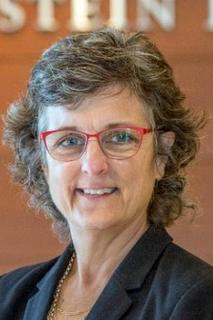
It is a privilege to serve as Director of Marquette University Law School’s Andrew Center for Restorative Justice. As director, I have witnessed the profound impact of restorative justice in action—bringing hope, healing, and practical solutions to individuals, families, and communities navigating serious harm.
I am grateful to work alongside Assistant Director, Becca Donaldson, Assistant Clinical Professor of Law. Since joining the Andrew Center Becca has been a vital partner in strengthening our programs, mentoring students, expanding community partnerships, and advancing restorative justice through thoughtful teaching and practice. Her leadership, integrity, and deep commitment to justice have helped shape the Andrew Center during a period of meaningful growth.
My own restorative justice journey began when Justice Janine Geske invited me to participate in restorative justice circles at Green Bay Correctional Institution—an experience that profoundly shaped my understanding of justice grounded in healing, accountability, and equity. Over 19 years as a Milwaukee County Circuit Court judge, including three as chief judge, I saw firsthand the urgent need for justice systems that center humanity, acknowledge trauma, and create pathways for responsibility and repair.
The Andrew Center exists because of the extraordinary generosity and vision of Suzanne (Sp’66) Andrew and the late Louis (L’66) Andrew. Suzanne’s continued leadership and commitment, together with Louie’s deep belief in justice rooted in dignity, accountability, and healing, helped ensure that restorative justice would have a permanent home at Marquette Law School. Louie’s legacy—and Suzanne’s enduring partnership—will continue to guide and inspire our work.
With this enduring foundation, the Andrew Center has become a permanent hub for restorative justice education, practice, and collaboration. We are advancing restorative justice as a response to some of our community’s most urgent and complex harms, including domestic violence, gun violence, and reckless driving. Recent highlights include:
- The Restorative Justice Clinic: Facilitating circles of support and healing in the community and in correctional facilities, fostering accountability, harm repair, and pathways forward.
- The Domestic Violence Initiative: Partnering with Sojourner Family Peace Center to develop carefully designed restorative justice pathways for families impacted by domestic violence.
- Community Safety Partnerships: Collaborating with the Medical College of Wisconsin and 414Life violence interrupters to address gun violence through healing‑centered, community‑based approaches; and partnering with the City of Milwaukee’s Vision Zero initiative and community members impacted by traffic violence to bring restorative justice into efforts to prevent reckless driving and save lives.
These efforts reflect our belief that restorative justice must be part of the response to the toughest challenges facing our city. By naming harm, addressing trauma, and insisting on accountability, restorative justice strengthens relationships, promotes healing, and helps build safer communities.
We remain steadfast in our mission to educate the next generation of legal and community leaders. Through the Restorative Justice Workshop, clinical programs, and interdisciplinary collaborations, our students are learning to practice law with skill, humility, and humanity—prepared to lead with compassion in a complex and divided world.
The Andrew Center’s mission—grounded in compassion, equity, respect, and trauma‑informed care—is more vital than ever. Together, we are helping reshape justice to reflect the full humanity of all involved.
To learn more about the Andrew Center’s work, visit law.marquette.edu/andrew-center. We welcome your questions, ideas, and partnership as we continue expanding this transformative work.
With gratitude,
Mary E. Triggiano
Director, Andrew Center for Restorative Justice
Marquette University Law School